
Our Impact
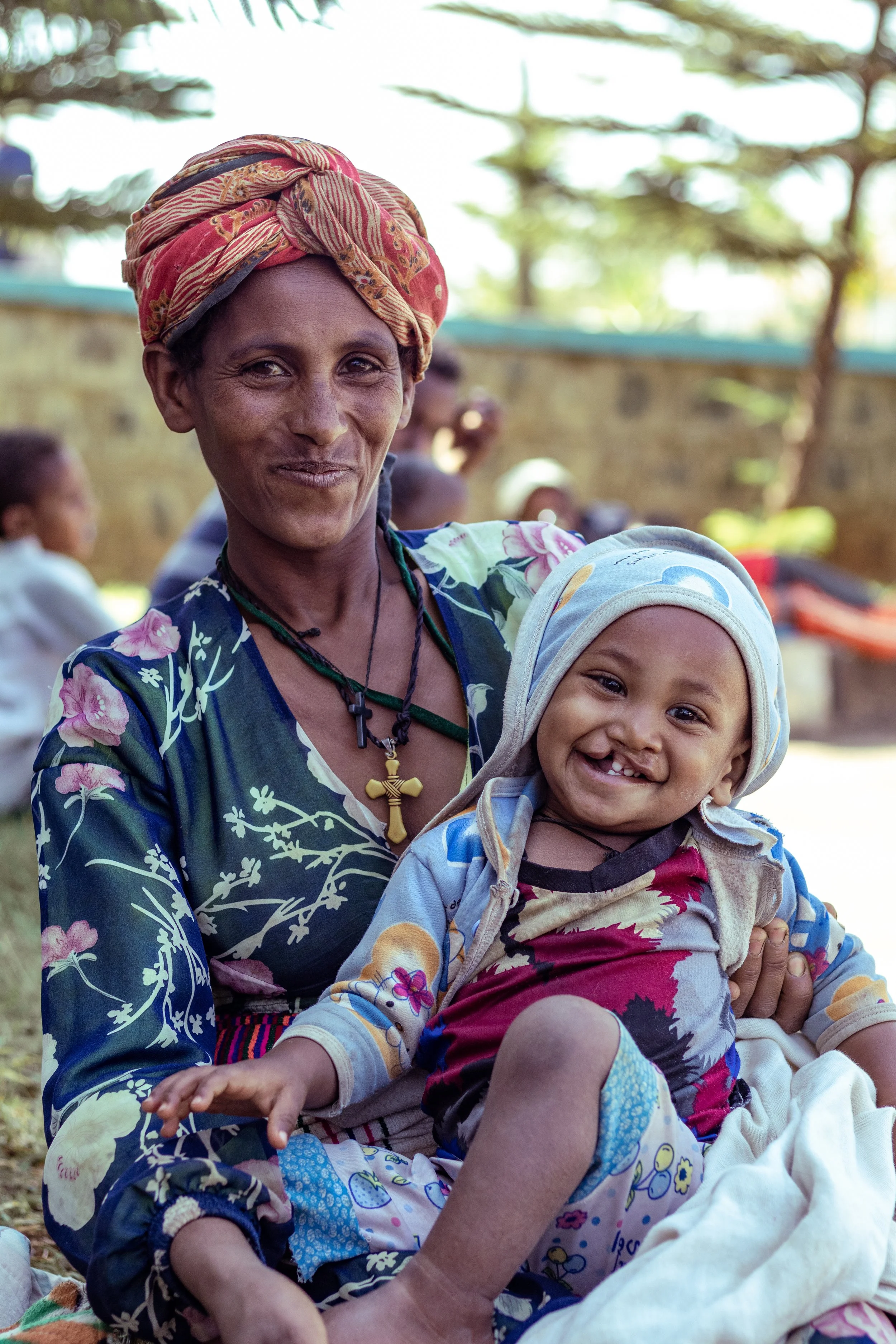
Cleft Programmes: Since 2001, we have provided access to treatment for more than 12,500 patients with cleft lip or palate, and complex facial disfigurements. Our outreach team consists of programme coordinators and managers, travelling to identify children and babies with cleft conditions and refer them to the hospitals where our cleft programmes take place. Children and their families are supported by Project Harar throughout the whole of their journeys, from identification in rural villages to treatment in hospitals and everything in between.
Stigma: Many children with facial disfigurements are ostracised by their communities, and most of our young patients are denied their right to a school-place. A simple operation for cleft can completely transform their life. Our young patients return to their villages empowered to take their place at school, grow up alongside peers, and in time have a family of their own. Read about our previous patients here.
Early Intervention: In 2025, we launched our Early Intervention Programme to ensure that babies with cleft conditions are identified and receive the help they need as early as possible. The Early Intervention Programme provides training for midwives in identifying cleft conditions at birth. This ensures that babies receive nutritional support and timely access to surgery.
Nutrition: Babies with a cleft lip and palate can become severely malnourished early on in life as they are unable to suckle and are left prone to choking. If untreated, a child with a cleft condition may not learn to speak properly and is at risk of suffering hearing problems. Our work helps mothers of children with cleft overcome difficulties in feeding their babies. This is important, as children must meet the optimal weight of 9kg before they have surgery and many arrive undernourished.
Complex Surgical Mission: In 2025, we carried out a complex surgical mission in partnership with Hilfsaktion Noma.e.V. The mission sought to provide surgery for survivors of Noma, a gangrenous disease of the face. 12 patients were successfully treated for Noma and other facial disfigurements.
Prior to Covid-19, once a year we coordinated a group of UK and international medical volunteers to operate on some of the most severely facially disfigured patients (ranging from tumours and noma, to hyena attacks and other complex facial conditions) from across Ethiopia. We aim to treat around 50 patients who come to us having experienced isolation and discrimination. The transformation, both physically and mentally, after surgery is really remarkable. Since 2011, we have provided surgery for more than 500 patients. During our annual complex mission, our medical team also helps to build the capacity of local surgeons, doctors, and nurses through the exchange of ideas, skills and practices.
Government Health and Social Worker Training: As part of our Early Intervention Programme, Project Harar trains midwives on identifying cleft conditions in newborns. This ensures that when a baby is born with a cleft condition, the midwife is equipped to identify the condition and provide support to newborns and their mothers. We have now trained over 10,300 health and social workers in Ethiopia. By enabling local networks to recognise facial disfigurements and refer patients to us, we greatly increase our reach across Ethiopia.
Partnering with the Ministry of Health: Thanks to our advocacy efforts, cleft lip and palate has now been formally recognised by the government as a significant cause of malnutrition and chronic ill-health in children, and is an important health priority in Ethiopia. Project Harar has been formally recognised as a key player in addressing this health issue; in 2018 we signed an MOU with the national government, where the importance of our role was formally acknowledged.
Make a donation.
Change a life.
When you give a child a smile, you give them a second chance at a happy and hopeful future.
